
How to Choose Colored Contacts: Skin Tone, Hair, Style and Lifestyle

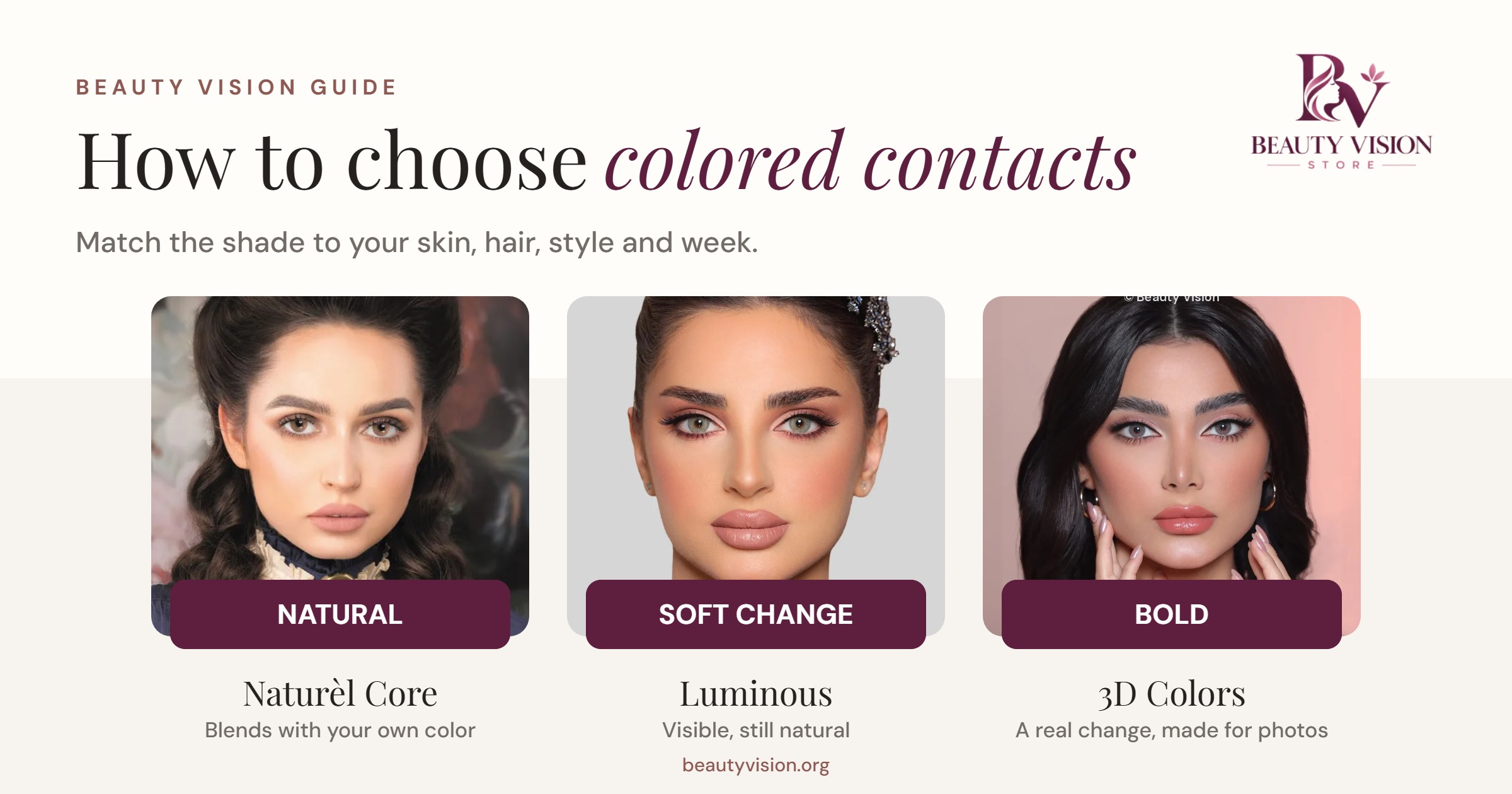
Knowing how to choose colored contacts is what separates a look that feels like you from one that feels like a costume. The right shade depends on more than your favorite color: your skin tone, hair, makeup, the lens design and how often you plan to wear them all play a part.
Use this guide on how to choose colored contacts to narrow down your options before you shop, then try our shade finder for a personal match.
Step 1: Start with your eyes, not the color
Before thinking about shades, make sure contact lenses are right for you. An eye exam confirms your eyes are healthy, checks the fit and tells you whether you need power. In the US, every contact lens, including plano colored lenses, needs a valid prescription. See colored contacts and prescriptions in the US.
Step 2: Decide how big a change you want
| Your goal | What to look for | Beauty Vision examples |
|---|---|---|
| A natural lift | Soft, blended patterns close to your own color | Naturèl Core, Élite |
| A visible but natural change | Clearer color with a gentle outer ring | Luminous, MyLense |
| A bold, camera-ready look | Dense color and a defined ring | 3D Colors |
Step 3: Match the shade to your skin tone
- Deep skin tones: warm, rich shades such as hazel, honey and light brown look radiant. For contrast, try a clear green or a bright blue.
- Medium and olive skin: almost everything works. Deep browns look polished; greens and hazels bring out warm undertones.
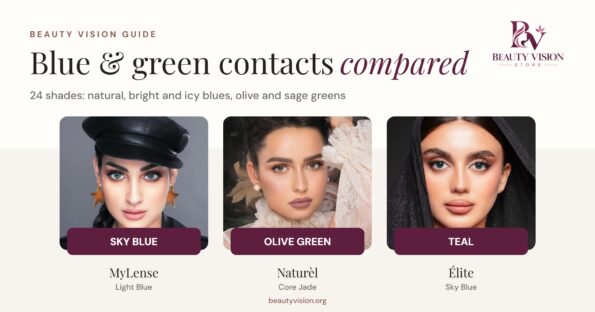
- Fair skin: cool grays and blues look soft and airy; light greens and light browns add warmth without overpowering your features.
Shopping by color? Browse hazel, brown, gray, green and blue.
Step 4: Consider your hair color
- Black hair: natural browns look effortless; blue, green or gray create striking contrast.
- Brown hair: the most flexible base. Deep brown, green and gray all work well.
- Golden blonde: warm browns and hazels echo the gold in your hair.
- Ash or platinum blonde: cool grays and soft blues keep the look harmonious.
- Red hair: green is a classic match; deep blue adds contrast.
Step 5: Understand the lens design
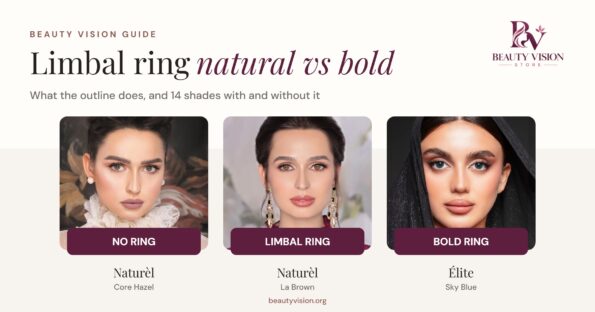
- Outer ring (limbal ring): a darker edge frames the iris and makes eyes look larger and more defined. Softer or no ring looks more natural. Read more in natural vs bold limbal rings.
- Color density: a denser print covers your natural color, which matters if you have dark brown eyes. A lighter print lets your own color show through for a subtle result. If your eyes are dark, see colored contacts for dark brown eyes.
- Pattern: multi-tone patterns copy the texture of a real iris and suit everyday wear; flatter, single-tone designs read as more dramatic.
Step 6: Think about your makeup
- Complementary: eyeshadow in tones close to your lens color for a soft, blended look.
- Contrasting: shades opposite on the color wheel make lenses pop, such as warm bronze with blue or gray, or plum with green or hazel.
- Liner and mascara: brown for softness, black for definition.
- Inner-corner highlight: brightens the eye and lifts the lens color.
Step 7: Match the wear schedule to your life
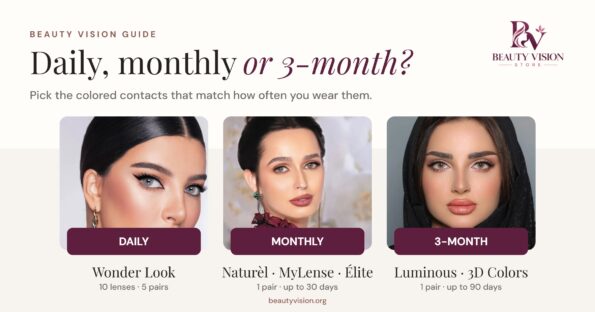
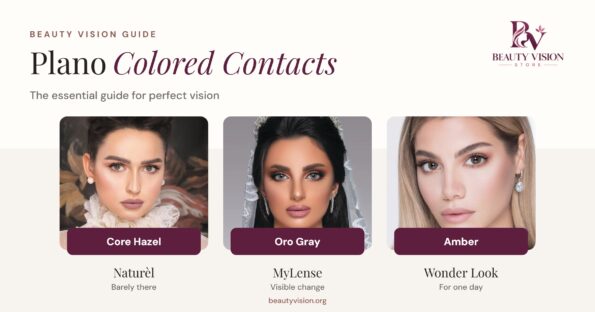
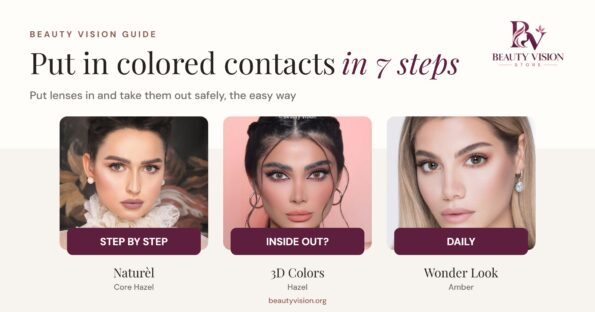
- Occasional wear: daily lenses such as Wonder Look, with no cleaning.
- A few days a week, several shades: monthly lenses from Naturèl, MyLense or Élite.
- Almost every day, one favorite shade: 3-month lenses from Luminous or 3D Colors.
Compare them in daily vs monthly colored contacts.
Step 8: Wear them safely
- Get your eyes checked before your first pair.
- Wash your hands before handling lenses and use fresh solution every time.
- Follow the wear time and replacement schedule on the box.
- Remove lenses and see an eye doctor if your eyes become red, painful or blurry.
Our lens care guide has the full routine.
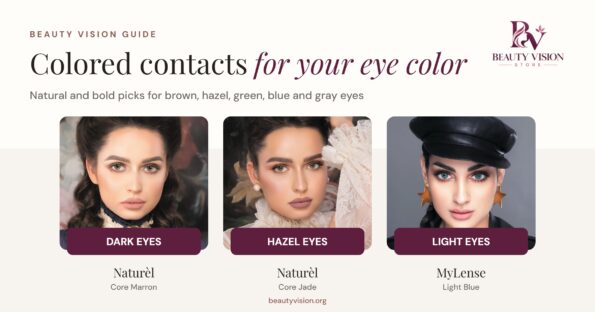
How to choose colored contacts by your natural eye color
Your own eye color is the canvas every lens sits on, so it changes how a shade looks on you. Knowing how to choose colored contacts for your natural color saves a lot of trial and error.
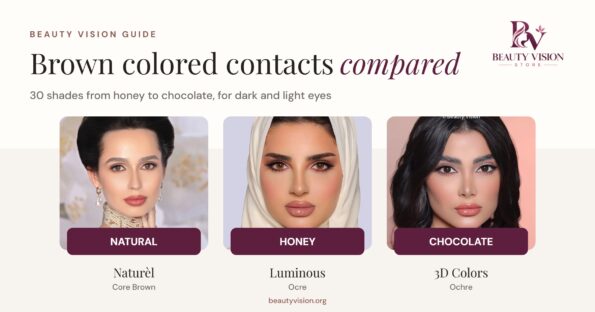
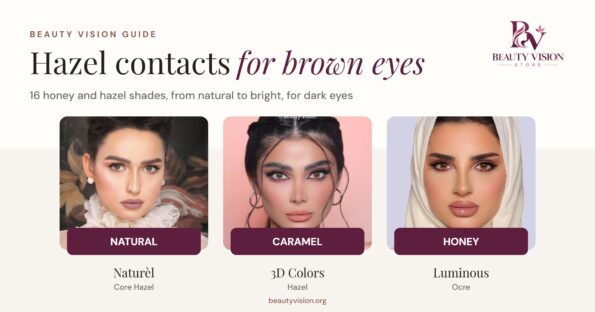
- Dark brown or black eyes: choose lenses with denser color and a defined outer ring so the new shade covers the brown. Hazel, honey, light brown and gray are popular first choices. Very light, sheer tints may barely show.
- Medium or light brown eyes: almost any shade works. Soft hazels and greens look natural; grays and blues give a bigger change.
- Hazel or green eyes: you can enhance your color with a green or honey lens, or go cooler with gray or blue.
- Blue or gray eyes: light shades show easily, so even subtle colored contacts make a visible difference. Deeper blues and grays intensify your look; warm browns create a striking change.
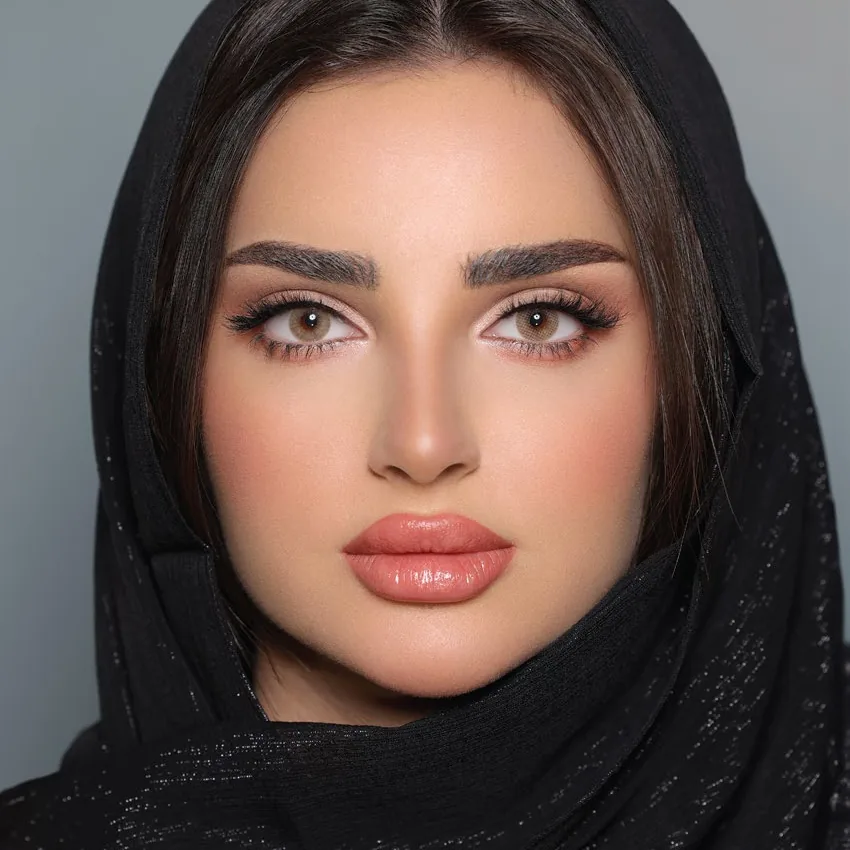
A quick shade guide: what each color does
| Shade family | The effect | Who it suits |
|---|---|---|
| Hazel and honey | Warm, bright and natural; lifts dark eyes in daylight | Almost everyone, especially warm and deep skin tones |
| Brown | Soft, polished and closest to a natural eye | Everyday wear, office, first-time wearers |
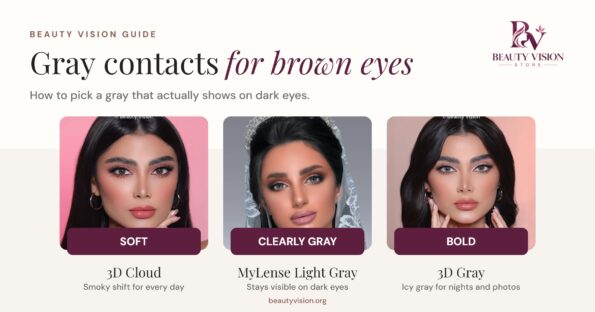
| Gray | Cool, elegant and modern; can be smoky or icy | Fair to medium skin, evening looks, photos |
| Green | Fresh and eye-catching; enhances warm undertones | Olive and medium skin, red and brown hair |
| Blue | The boldest change on dark eyes; bright and dramatic | Special occasions, fair skin, black hair for contrast |

Choosing colored contacts by occasion
Many people own more than one shade. Matching the lens to the moment keeps every look intentional:
- Office and school: natural browns and soft hazels that look like your own eyes on their best day.
- Weekends and dinners: a clearer gray, green or honey for a noticeable but still natural change.
- Weddings and photo shoots: bolder shades with a defined ring that stand out on camera.
- Travel: daily lenses in a versatile shade, so there is nothing to clean on the road.
How lighting changes your colored contacts
The same lens can look different from one room to the next. In bright daylight your pupils are small, so more of the printed color shows and shades look lighter and brighter. Indoors and at night your pupils widen and colored contacts look deeper and more subtle. Warm yellow bulbs make grays look softer and browns warmer, while cool white light brings out blues and grays. Always judge a new shade near a window, then check it in the lighting where you will wear it most.
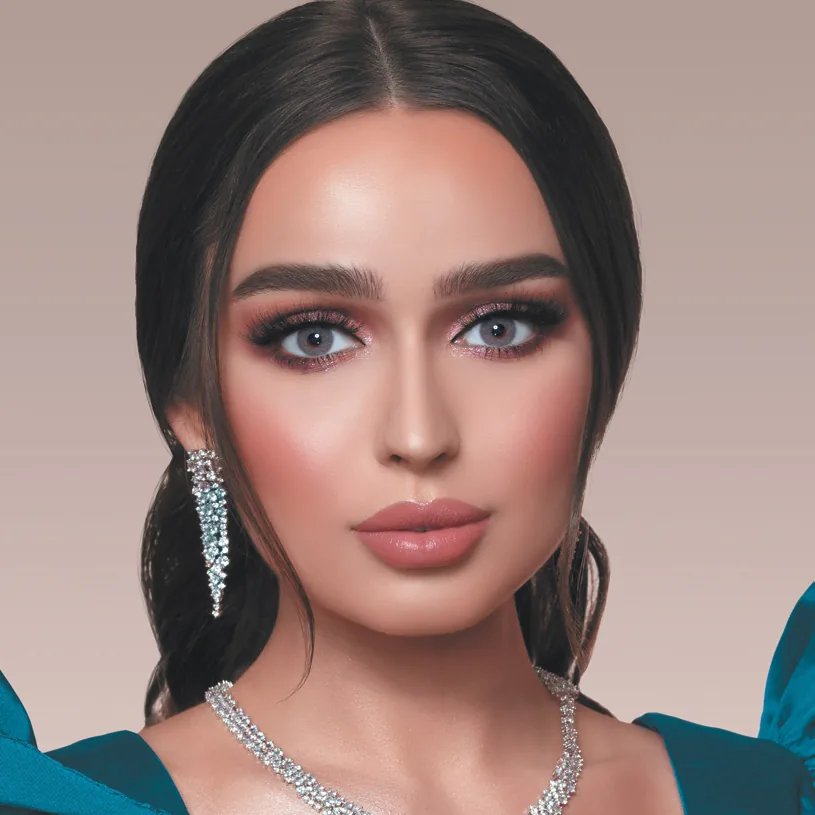
Questions to ask yourself before you buy
- Do I want people to notice the change, or should it look like my natural color?
- How many days a week will I wear these lenses?
- Will I mostly wear them in daylight, at the office or at night?
- Do I need power, and do I have an up-to-date prescription?
- Am I happy to clean and store lenses, or do I prefer daily wear?
Your answers point you to the right brand, shade and schedule. If you are still unsure, our shade finder asks similar questions and suggests a match.
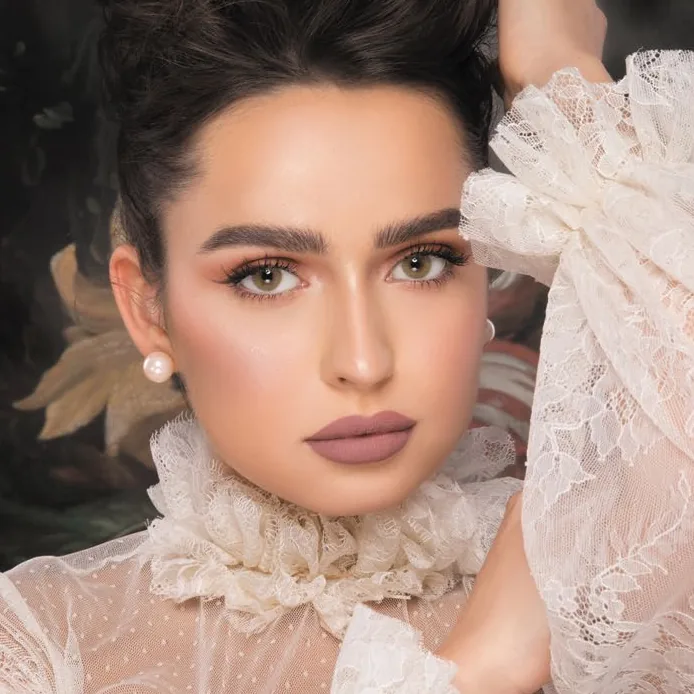
Mistakes to avoid when choosing a shade
- Choosing from a single photo. Screens and filters change colors; look at several photos, ideally in daylight.
- Going too bold for everyday wear. A dramatic shade is great for events but can feel like too much at work.
- Ignoring your eye color. A sheer gray that looks amazing on light eyes can disappear on dark brown eyes.
- Forgetting the schedule. A beautiful 3-month lens is poor value if you only wear it twice a month.
How to choose colored contacts for the US market: what American shoppers ask most
Most of our US customers come with the same handful of questions before they order colored contacts online. Here are the answers in one place.
Do I need a prescription for colored contacts in the US?
Yes. Under US rules every contact lens is a medical device, including plano colored contacts with no power. A seller should verify a valid prescription before shipping. The FTC Contact Lens Rule explains what sellers and eye doctors must do, and our US prescription guide lists what to have ready.
How long does shipping to the US take?
Beauty Vision orders ship from the UAE and usually reach US addresses in 1 to 5 business days. You will get a tracking number by email as soon as your order leaves our warehouse.
Are your colored contacts FDA-cleared?
Yes. Our lenses are made in Korea and cleared by the FDA under 510(k) K141699, and they also carry CE, ISO 13485 and MFDS certification.
Can I order different powers for each eye?
Yes. On each product page you choose the power for the right and left eye separately, from plano (0.00) down to −8.00 on most shades. 3D Colors is available from −0.50 to −5.00 for now; −5.50 to −8.00 is coming soon.
How to choose colored contacts for your face shape and features
Face shape plays a smaller role than skin tone or eye color, but a few details help you fine-tune the look of your colored contacts:
- Small or deep-set eyes: a lens with a defined outer ring makes the iris look larger and brighter. Lighter shades also help eyes stand out.
- Large or wide-set eyes: softer patterns with little or no ring keep the look balanced and natural.
- Strong brows and dark lashes: these frame the eye, so you can carry bolder colored contacts without them looking heavy.
- Freckles or warm undertones: greens and hazels pick up the warm flecks in your skin beautifully.
- Cool undertones and pink cheeks: grays and blues echo the cool tones in your complexion.
Natural vs dramatic colored contacts: a side-by-side view
| Feature | Natural colored contacts | Dramatic colored contacts |
|---|---|---|
| Color density | Lighter, lets your own color blend through | Denser, covers your natural color |
| Outer ring | Soft or none | Defined and darker |
| Pattern | Multi-tone, iris-like | Bolder, more graphic |
| Best on | Light and medium eyes for everyday wear | Dark eyes, photos, events |
| Beauty Vision examples | Naturèl Core, Élite, Luminous Latin Brown | 3D Colors, Luminous Blue, MyLense Light Gray |
Neither style is better. Many people keep one natural pair for work and one dramatic pair for weekends.
How to choose colored contacts that look good on camera
Phones and cameras flatten color, especially under warm indoor light. If photos and video matter to you, as they do for content creators and brides, keep these tips in mind:
- Choose colored contacts one step bolder than you would for daylight, so the shade still reads on camera.
- A defined outer ring keeps the eye shape crisp in close-ups.
- Natural window light shows the truest color; ring lights can make grays and blues look icier.
- Test your lenses with your usual makeup and filter before an important shoot.
Budget: what you really pay for colored contacts
The box price is only part of the picture. To compare colored contacts fairly, think in cost per wear: divide the price of a box by the number of days you will actually wear it. A 3-month pair worn five days a week works out far cheaper per wear than daily lenses, while daily lenses waste nothing if you only wear them a few times a month. Our daily vs monthly colored contacts guide shows the math. Do not forget solution and a case for monthly and 3-month lenses, and always keep a spare pair.
How to choose colored contacts safely: the medical basics
Style comes second to safety. The FDA’s contact lens page is clear that decorative lenses carry the same risks as corrective ones when they are poorly fitted or badly cared for. Choose colored contacts from a seller who asks for your power, sells cleared lenses and explains how to wear them. Never buy from a beauty supply shop, a market stall or a social media seller who cannot tell you the brand, diameter and base curve. And if your eyes ever feel sore, look red or your vision blurs, take the lenses out and see an eye doctor before you wear them again.
A simple checklist before you order
- I have had a recent eye exam and know my power for each eye.
- I know how dramatic a change I want.
- I have picked a shade family that suits my skin tone and eye color.
- I have chosen a wear schedule that fits how often I will wear them.
- I have solution and a clean case ready, or I am choosing daily lenses.
- I have checked the diameter and box contents on the product page.
Tick all six and you are ready to choose colored contacts with confidence.
Why choose Beauty Vision
Beauty Vision is the online store of Diamond Eye, the company behind Luminous, Naturèl, MyLense, Wonder Look, 3D Colors and Élite. Our lenses are made in Korea, FDA-cleared (510(k) K141699) and certified to CE, ISO 13485 and MFDS standards, with plano and power options on most shades.
Frequently asked questions
Which colored contacts look the most natural?
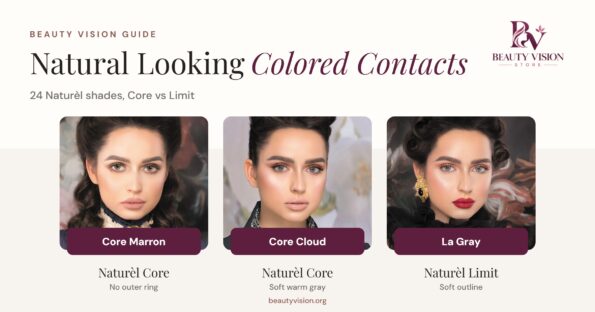
Shades close to your own eye color with a soft, multi-tone pattern and a gentle outer ring, such as Naturèl Core, look the most natural.
Which colors show best on dark brown eyes?
Lenses with denser color and a defined outer ring show best. Hazel, honey and gray are popular choices; see our guide to gray contacts for brown eyes.
Should I choose colored contacts by skin tone or by hair color?
Start with skin tone, since it affects how warm or cool a shade looks on you, then use hair color to fine-tune between two or three options.
Can I wear colored contacts every day?
Yes, if your eye doctor approves and you follow the wear time and care routine. 3-month lenses are the most practical choice for daily wear.
Can I try a colored contact before buying a full supply?
Yes. Many people order a single box of a new shade first, wear it a few times in different light, then buy more of the one they love.
Which colored contacts are best for photos?
Shades with denser color and a defined outer ring photograph best, because they hold their color under flash and studio lights. 3D Colors and bolder Luminous shades are popular for shoots.
How do I choose colored contacts if I have never worn lenses?
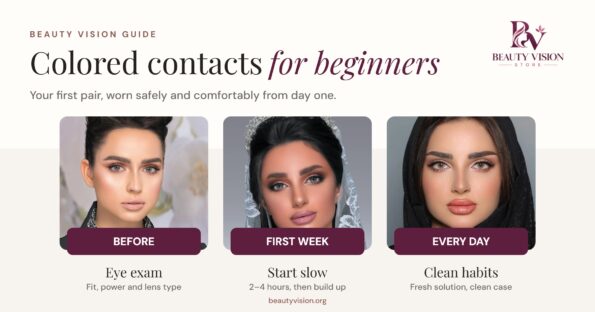
Start with an eye exam, then pick a natural shade on a daily schedule so there is nothing to clean while you learn. Our colored contacts for beginners guide walks you through the first week.
Are colored contacts safe to buy online?
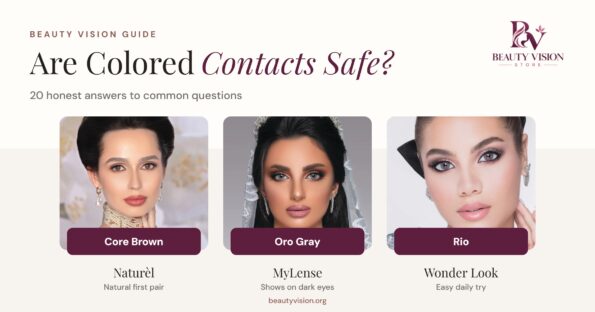
Yes, from a seller that sells FDA-cleared lenses, asks for your power and explains care. Avoid costume shops and sellers who do not mention prescriptions.
Can I return colored contacts if the shade is not right?
For hygiene reasons, opened lenses cannot be returned, so it pays to choose carefully. Unopened boxes follow our return and refund policy. If you are unsure between two shades, start with one box of each.
Keep reading
- Best Luminous Colored Contacts: All 26 Shades Compared
- Where to Buy Colored Contacts Safely: A Complete US Guide
This guide is for general information and is not medical advice. Always follow your eye doctor’s instructions and the directions on your lens packaging.

 USD
 AED
 KWD
 OMR